Muscle Spasms
Deep heating relaxes guarded muscle fibers and improves local circulation.
Deep Tissue Sound Waves
Speed up the recovery
Stubborn shoulder pain that flares after every workout. A rotator cuff strain that has not loosened up in three months. Chronic muscle spasms in the lower back that ice and stretching barely touch. Many patients arrive having tried heating pads, foam rollers and weeks of rest before realizing the deeper layers of tissue need a more focused input. Surface heat only reaches a few millimeters. Deep tendons, fascia and trigger points sit much further in, and they often stay locked even when the surface feels fine.
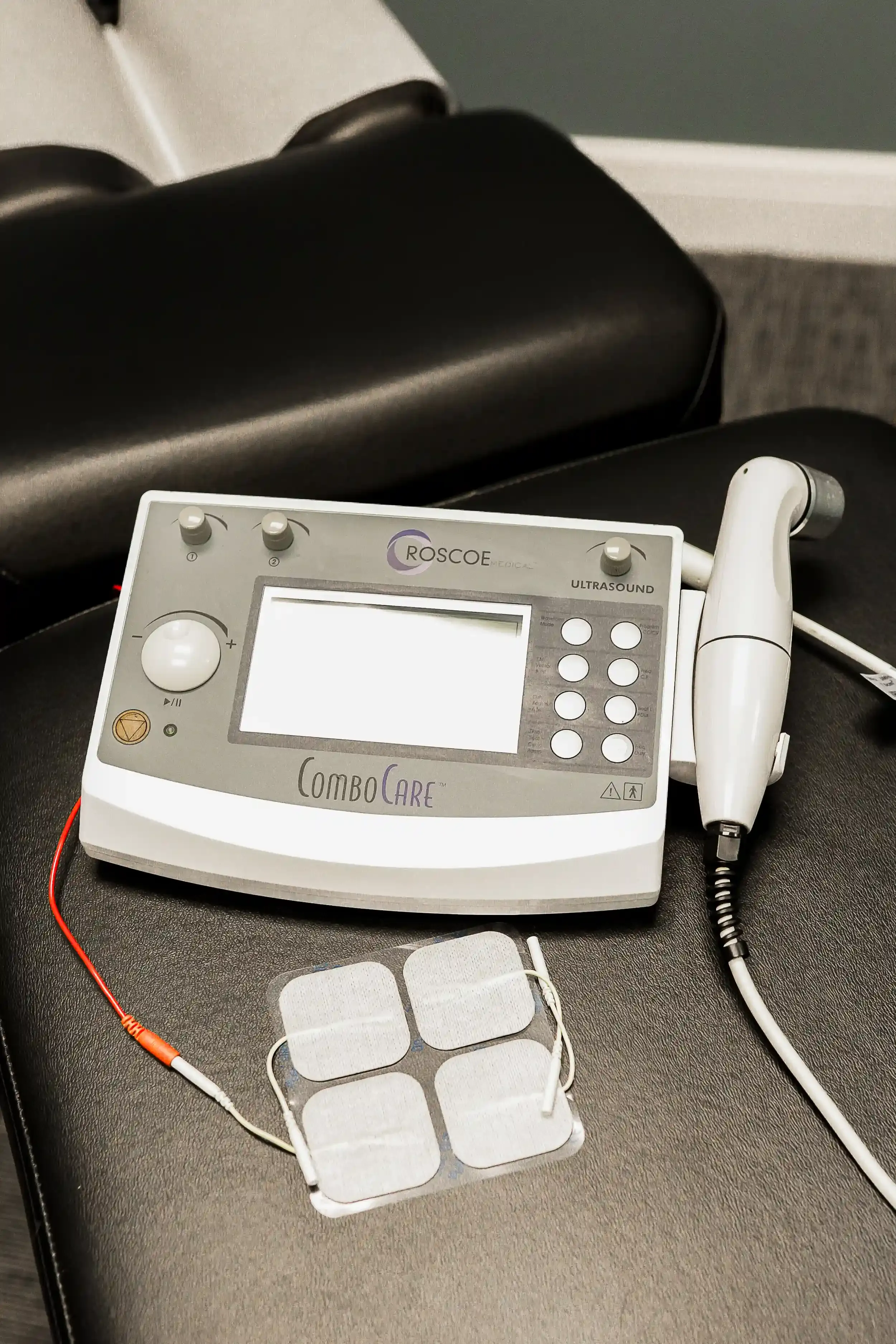
Therapeutic ultrasound delivers high-frequency sound waves (1 MHz or 3 MHz) several centimeters into soft tissue. Those waves create deep heat and gentle mechanical agitation that increase local blood flow, calm muscle guarding and stimulate cellular healing in tendons, ligaments and muscle. At Spine-Ability we use ultrasound as part of a broader plan with chiropractic adjustments, soft tissue therapy and rehab exercises so the tissue heals and the joint above it actually moves better. Sessions are short, painless and drug-free, with no downtime afterward.
Sound-wave biology and timing
Therapeutic ultrasound is a treatment modality that uses high-frequency sound waves (typically 1 MHz or 3 MHz) to deliver energy several centimeters into soft tissue. It is a healing tool, not an imaging tool. The ultrasound your obstetrician uses to view a baby and the ultrasound your chiropractor uses to treat a rotator cuff use the same family of sound waves, but the therapeutic units run at different power settings and frequencies, focused on tissue effect rather than picture quality. There is no image, no screen and no diagnosis from a therapy ultrasound visit.
The mechanism is twofold. First, thermal effects: continuous ultrasound creates deep heat in tissue, raising local temperature, dilating small blood vessels and increasing circulation. That extra blood flow brings oxygen, nutrients and inflammatory clean-up cells to the injured area. Second, non-thermal (mechanical) effects: pulsed ultrasound creates micro-vibrations and gentle cavitation that stimulate fibroblasts, the cells that lay down new collagen during tendon and ligament repair. The 1 MHz setting penetrates deeper (around 3-5 cm) and works well for hips, lumbar paraspinals and large muscle groups. The 3 MHz setting stays shallower (around 1-2 cm) and is used for wrists, ankles, knees and superficial tendons.
Therapeutic ultrasound has been used in physical medicine for more than 60 years and is recognized by the American Physical Therapy Association and the American Chiropractic Association as a supportive modality for musculoskeletal conditions. It is FDA-cleared as a Class II medical device. We pair it with chiropractic care, manual therapy and corrective exercises so the soft tissue heals while the joint and motor patterns above it improve at the same time.
What patients gain
2000+ Satisfied patients
Warms tendons, ligaments and muscle 3-5 cm below the skin, well past what heating pads reach.
Boosts local blood flow, delivering oxygen and clearing inflammatory byproducts faster.
Stimulates fibroblast activity that lays down new collagen in tendon and ligament repair.
Eases pain and muscle guarding without NSAIDs, opioids or injections.
Each treated area takes 5-10 minutes and feels like a light, warm massage.
Works well alongside adjustments, soft tissue therapy and rehab exercises.
How options compare
| Treatment | Mechanism | Time | Results | Duration | Downtime | Best For |
|---|---|---|---|---|---|---|
| Therapeutic Ultrasound | Sound waves create deep heat and micro-vibration in tissue | 5-10 min per area | Relief often within 2-4 sessions | Builds across a 6-12 session plan | None | Deep tendon, muscle spasm and rotator cuff pain |
| Heat Pack | Surface heat by conduction on the skin | 15-20 min per area | Short-term symptom relief | Wears off within 1-2 hours | None | Surface muscle tightness and pre-treatment warm-up |
| Electrical Muscle Stimulation | Electrical pulses contract or sedate muscle fibers | 10-15 min per area | Quick reduction of acute spasm and pain | Effect builds with repeat sessions | None | Muscle spasms, pain modulation and re-education |
Candidacy and safety
Therapeutic ultrasound is a strong fit for most adults with muscle, tendon or joint pain that has not responded to rest and home care alone. The right candidate is decided through a hands-on exam and a brief history review.
At your first visit we screen for these red flags. If ultrasound is not appropriate for you, we will say so and recommend a different modality, imaging or a medical referral. Safety always comes before any technique.
Step by step
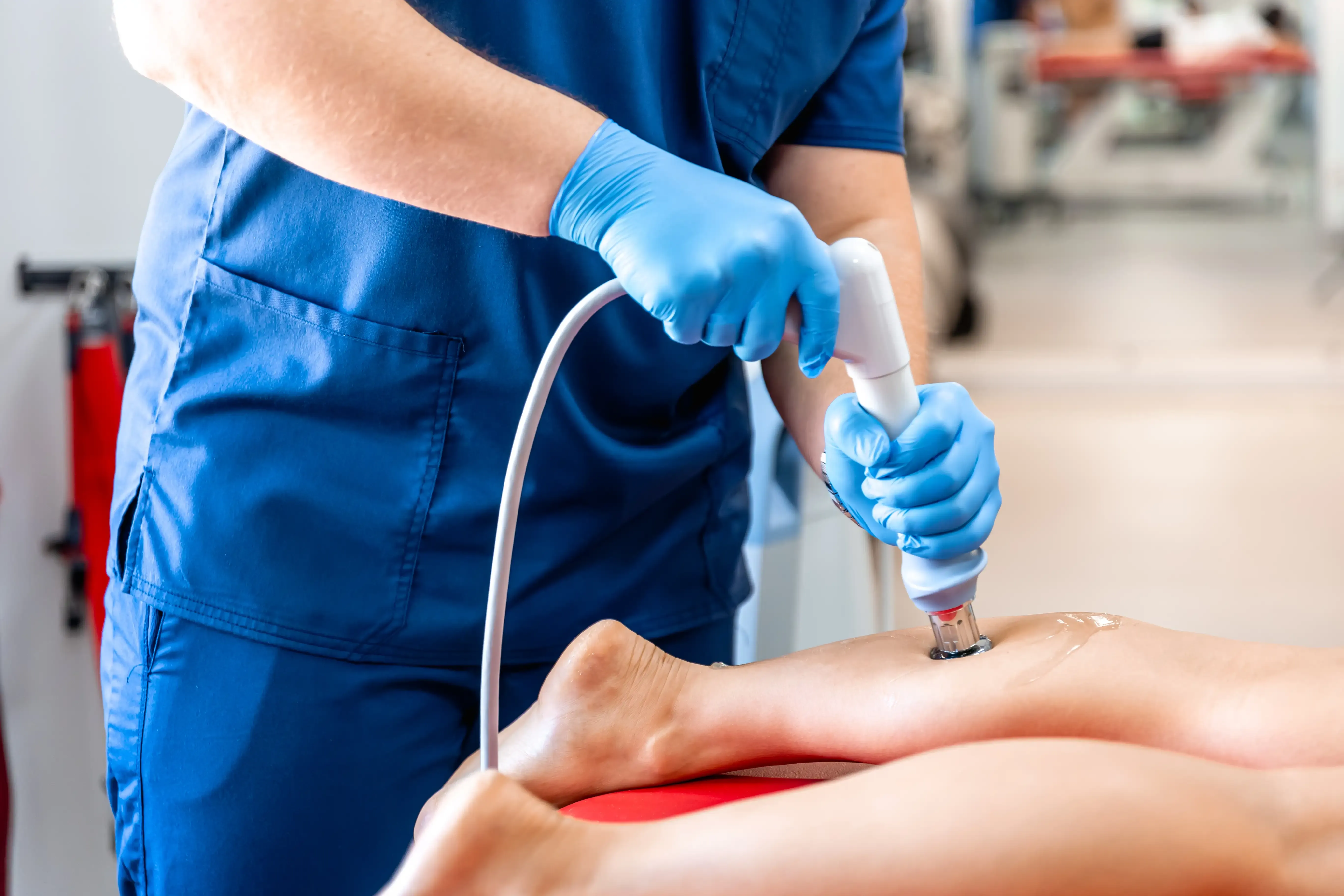
Dr. Canavan positions the area, applies water-based ultrasound gel and selects 1 MHz or 3 MHz.
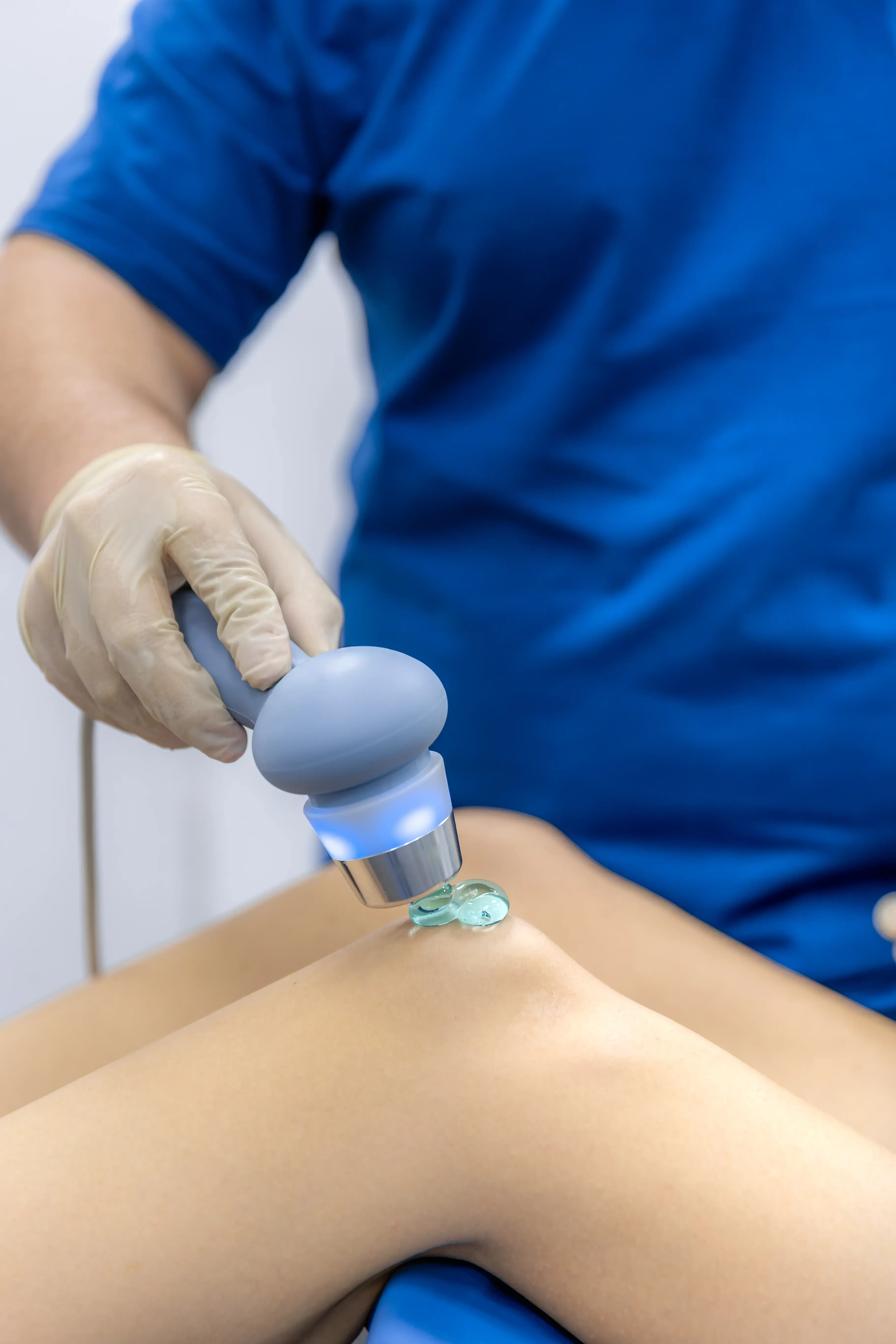
Dr. Canavan glides the ultrasound head in small overlapping circles over the target tissue for 5-10 minutes.
Dr. Canavan wipes the area, retests range of motion and pairs ultrasound with the next part of your care plan.
What to know
Therapeutic ultrasound has an excellent safety profile when delivered by a trained provider with the head kept moving across the treatment area. Most patients feel only a mild, comfortable warmth during the session and nothing afterward. The most common side effect is brief, low-grade warmth or pinkness over the treated skin that resolves within an hour. A small number of patients report mild soreness or a feeling like a workout the next day as circulation increases through previously guarded tissue.
Serious side effects are rare and almost always linked to misuse. If the ultrasound head is held stationary at high intensity, the deep tissue temperature can rise too quickly and cause a thermal burn. We avoid this by keeping the head constantly moving in small overlapping circles, monitoring patient feedback every 30 seconds and adjusting intensity if any discomfort is reported.
Call us if after a session you notice persistent pain, a hot spot, a deep ache that worsens, blistering or skin color changes in the area, or any new numbness. These are not expected reactions and need same-day evaluation. Tell us about any new medications or implants since your last visit so we can adjust the plan or recommend a different modality.
Therapeutic ultrasound in the Tampa Bay area typically runs $25 to $75 per session as a stand-alone service. At Spine-Ability we more often bundle ultrasound into a broader treatment visit (for example with an adjustment, soft tissue work or rehab exercise) so most patients see ultrasound included in their per-visit chiropractic rate rather than billed separately.
Insurance coverage for therapeutic ultrasound varies by carrier and by diagnosis. Some major plans cover it as a physical medicine modality when used for a covered musculoskeletal diagnosis; others bundle or exclude it. We verify benefits (visit limits, copay, deductible, modality coverage) before your second visit so there are no surprise charges, and we are upfront when a modality is unlikely to be covered.
If you have been in a car accident, your Florida Personal Injury Protection (PIP) generally covers up to 80 percent of medically necessary chiropractic care, including ultrasound, when ordered as part of your treatment plan. We handle PIP billing directly so you can focus on healing. For our veterans, we participate in the VA Community Care Network, and eligible veterans can receive chiropractic care with ultrasound at Spine-Ability with no out-of-pocket cost when authorized through the VA.
Booking note: ultrasound visits are scheduled by phone at (813) 938-7500 so our team can match you with the right provider and pair ultrasound with the rest of your plan on day one.
Family-owned, concierge care
Athletic Training expertise dialed in for tendon, muscle and joint recovery.
Frequency and intensity matched to depth, body region and stage of healing.
Ultrasound paired with adjustments, soft tissue work and corrective exercise.
Unhurried visits and a five-provider team coordinating your full recovery.
Ultrasound therapy is available at both our Apollo Beach and Riverview clinics, so patients across Hillsborough County can access consistent, provider-led treatment close to home.
Florida auto-injury PIP and VA Community Care commonly cover therapeutic ultrasound, and we verify your benefits upfront so there are no billing surprises during your recovery.
Ultrasound therapy works best alongside these complementary modalities.
Deep-tissue Class IV laser for tendonitis, plantar fasciitis and stubborn joint pain - accelerates healing in 10-minute treatments with zero downtime.
Learn MoreFocused acoustic-pulse therapy for chronic tendon and plantar fascia injuries - breaks up scar tissue and triggers natural healing.
Learn MoreGentle E-stim during your visit to relax muscle spasms, dampen pain signals and stimulate circulation in healing tissue.
Learn MoreWhat patients ask most
Therapeutic ultrasound is a treatment that uses high-frequency sound waves (1 MHz or 3 MHz) to deliver deep heat and micro-vibration into muscle, tendon and ligament tissue to ease pain and speed healing.
Both use sound waves, but therapy ultrasound is tuned for tissue effect, not pictures. There is no screen, no image and no diagnosis from a therapy ultrasound visit. The goal is healing, not imaging.
Muscle spasms, rotator cuff strain, biceps tendinitis, tennis elbow, Achilles tendinitis, plantar fasciitis, chronic low back muscle pain and other soft tissue and tendon conditions.
No. Most patients feel only a mild, comfortable warmth as the sound waves move through the tissue. The ultrasound head glides across the skin in small overlapping circles for 5-10 minutes.
Most patients follow a 6-12 session plan over 3-6 weeks, paired with adjustments, soft tissue work and rehab exercises. Acute strains may resolve faster; chronic patterns may need a longer run.
Side effects are rare and usually limited to brief warmth or mild post-session soreness. Serious reactions are very uncommon when the device is used correctly with the head kept moving.
Pregnant patients should not have ultrasound over the abdomen or pelvis. We avoid treating over known cancers, pacemakers and growth plates in children. We screen for these at your first visit.
Call (813) 938-7500. Our online booking is reserved for Exomind and Emsculpt Neo at Apollo Beach; chiropractic and therapeutic ultrasound visits are scheduled by phone.