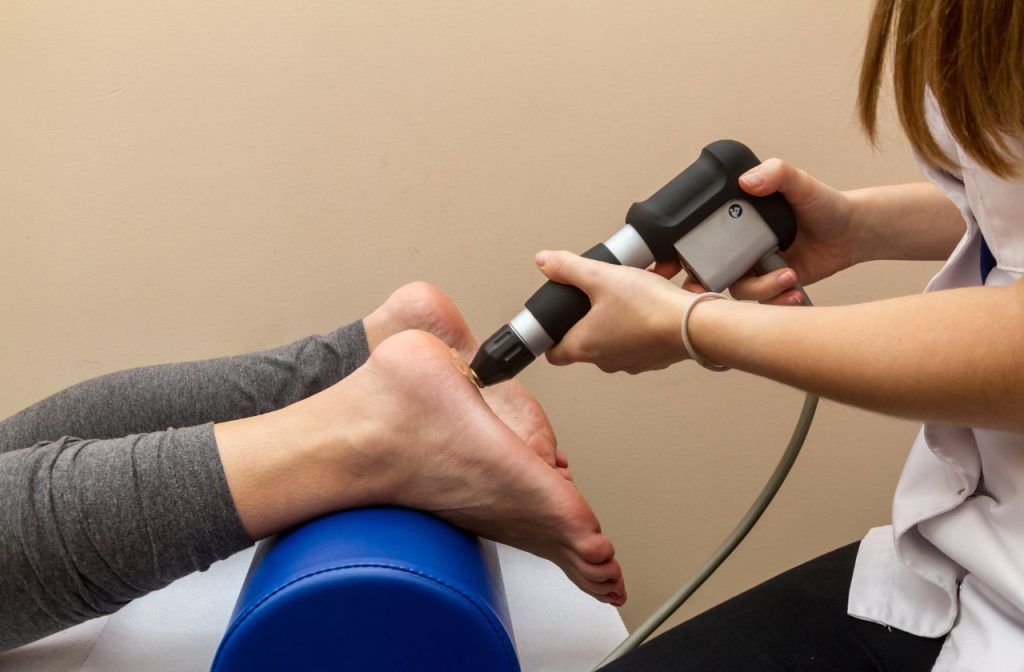
Plantar Fasciitis
Breaks down heel scar tissue and restores fascia healing
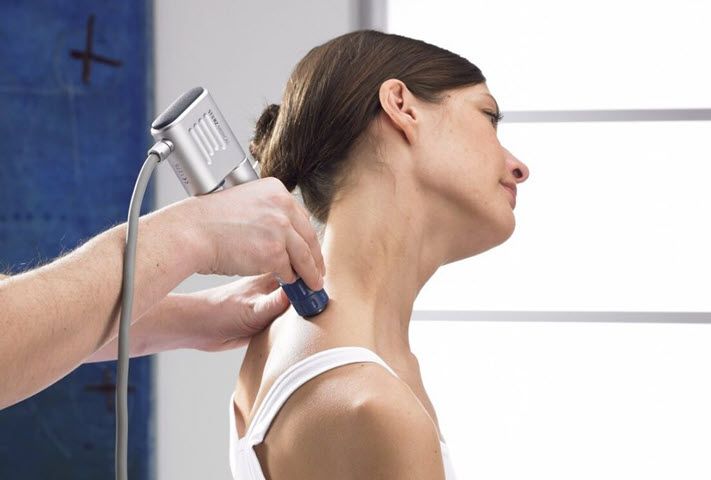
Acoustic wave treatment for chronic pain and tendon repair.
Understanding Stalled Healing
Tendon injuries have a frustrating habit of lingering. You ice it, you rest it, you stretch it, and six months later that heel still stabs you out of bed every morning. Patients tell us they have tried cortisone shots that wore off, braces that did not help, and physical therapy that plateaued. The reason: degenerative tendon tissue (tendinosis) does not heal the same way an acute strain does. Blood flow is poor, collagen fibers are disorganized, and the body's repair signals stop firing.
Shockwave therapy delivers high-energy acoustic pulses directly into the injured tissue. Those mechanical waves trigger a controlled micro-inflammatory response, recruit growth factors, and stimulate new blood vessel formation (neovascularization) in tissue that had given up trying to heal. Within a few sessions, most patients notice less morning pain, better mobility, and improved tolerance for activity. It is the closest thing chiropractic medicine has to a reset button for chronic soft tissue injuries.
The Science of Acoustic Waves
Shockwave therapy, also called extracorporeal shockwave therapy (ESWT) or acoustic wave therapy, is a non-invasive treatment that uses pulses of mechanical sound energy to stimulate healing in injured tendons, ligaments, and soft tissue. ESWT has been FDA-cleared for plantar fasciitis since 2000 and for chronic lateral epicondylitis (tennis elbow) since 2003, with expanded clearances for additional musculoskeletal indications since then.
The handheld applicator delivers acoustic pressure waves that travel a few centimeters into tissue. Through a process called mechanotransduction (cells converting mechanical signals into biochemical ones), the waves trigger neovascularization (new blood vessel growth), recruit growth factors like VEGF, and reset a controlled inflammatory response that restarts repair in stalled tissue. According to the American Chiropractic Association, ESWT is now one of the evidence-supported non-surgical options for chronic tendinopathy.
There are two main waveforms. Radial shockwave spreads energy across a broader area near the skin surface and is well suited to plantar fasciitis, tennis elbow, and superficial trigger points. Focused shockwave concentrates energy at a precise depth and is better for deeper structures like the rotator cuff or Achilles insertion. Dr. Canavan selects the waveform and intensity based on your specific injury, depth of the lesion, and pain tolerance.
You feel rapid tapping pulses, somewhat like a deep percussive massage, applied directly to the painful area through a thin layer of ultrasound gel. Sessions are short (5-15 minutes), no anesthesia is needed, and you walk out and resume normal activity that same day. Class IV K laser therapy as a complementary treatment is often added between shockwave sessions to accelerate cellular recovery.
Most patients report noticeable improvement within 2-3 sessions, with peak results developing 8-12 weeks after the final treatment as collagen remodels and new circulation matures. For appropriate conditions, the published response rates run 65-85 percent across the strongest trials.
Drug-Free, Surgery-Free Healing
2000+ Satisfied patients
No needles, no incisions, no anesthesia required at any session
Return to work, training, or daily activity the same day
Triggers neovascularization and growth-factor release in tissue
Many patients feel improvement within the first 2 to 3 visits
An alternative to cortisone, opioids, and NSAIDs for pain relief
A conservative option before considering surgical intervention
Compare Your Options
| Treatment | Mechanism | Time | Results | Duration | Downtime | Best For |
|---|---|---|---|---|---|---|
| Shockwave Therapy | Acoustic pressure waves | 5-15 min | 65-85% response rate | Long-term | None | Chronic tendinopathy |
| Cortisone Injection | Anti-inflammatory drug | 10 min | Short-term relief | Weeks to months | 1-2 days | Acute flare-ups |
| Surgery | Tissue debridement or release | 1-2 hours | Variable success | Permanent if successful | Weeks to months | Failed conservative care |

Finding Your Best Path to Healing
Shockwave therapy works best for patients with chronic soft tissue and tendon conditions that have not responded to rest, stretching, or standard physical therapy.
Dr. Canavan reviews your medical history at the consultation and adjusts or recommends a different modality if shockwave is not safe in your case.
Step-by-Step Process
Dr. Canavan palpates the painful area and maps the treatment zone using clinical exam findings.
Dr. Canavan applies ultrasound gel and delivers 2,000 to 4,000 acoustic pulses with the radial or focused handpiece.
Dr. Canavan reviews aftercare, light activity guidance, and schedules the next session 5 to 7 days later.
What to Know
The most common reactions are transient discomfort during the pulses (a deep tapping sensation), mild redness over the treated skin, and short-term soreness that feels similar to a tough workout. These typically resolve within 24 to 48 hours. Some patients notice a brief increase in baseline pain for a day or two as the controlled inflammatory response kicks in, which is part of the intended healing mechanism.
Mild bruising or small petechiae (pinpoint capillary bleeding) may appear in the treatment area, particularly in patients on aspirin or other blood-thinning supplements. These resolve on their own within a week. Headache or temporary numbness in the treated zone has been reported rarely and resolves without intervention.
ESWT has been FDA-cleared in the United States since 2000 for plantar fasciitis and has an extensive published safety record for musculoskeletal use. Serious complications such as tendon rupture are extremely rare and have not been linked to properly dosed radial or focused shockwave for the conditions we treat. Dr. Canavan's specific shockwave training ensures dosing stays within evidence-supported parameters for each tissue type.
In the Tampa Bay and Hillsborough County market, shockwave therapy sessions typically range from $75 to $200 per session, with most patients needing 3 to 6 sessions for a complete course. Pricing depends on the treatment area, whether radial or focused shockwave is used, and the length of each session. Exact pricing is reviewed at your consultation based on your individual treatment plan.
Most commercial health insurance plans in Florida do NOT cover shockwave therapy for musculoskeletal indications. They classify it as investigational or as a self-pay service even though it is FDA-cleared. We tell patients this up front so there are no surprises. If a plan does happen to cover it, we will help you submit, but you should plan on self-pay.
Because most patients pay out of pocket, we offer bundled packages on a typical 3-session and 6-session course that bring the per-session cost down. The package also includes the initial evaluation and re-evaluation appointments. See PIP and auto insurance payment options at Spine-Ability for the full breakdown.
If your tendon or shoulder pain stems from a car accident, Florida Personal Injury Protection (PIP) may cover related care including shockwave when medically indicated. Our team handles the PIP paperwork directly with your auto carrier. Pair shockwave with auto and personal injury treatment in Apollo Beach and Riverview for a comprehensive recovery plan.
Apollo Beach and Riverview's Trusted Provider
Dr. Canavan trained specifically in acoustic wave protocols and dosing
Athletic Training MS background informs return-to-activity planning
Apollo Beach and Riverview offices serve all of Hillsborough County
Pairs shockwave with manual therapy and rehab for compounded results
Because most insurance doesn't cover ESWT, we offer bundled 3- and 6-session self-pay packages so you know the full cost upfront with no surprises.
We use FDA-cleared shockwave devices with a clinical track record dating back to 2000, giving you confidence in both the safety and the evidence behind your treatment.
Combine shockwave with these complementary chiropractic services.
Deep-tissue Class IV laser for tendonitis, plantar fasciitis and stubborn joint pain - accelerates healing in 10-minute treatments with zero downtime.
Learn MoreDeep-tissue ultrasound that warms muscle and connective tissue, easing chronic pain and accelerating soft-tissue recovery between visits.
Learn MoreInstrument-assisted myofascial release and trigger-point work paired with adjustments to release tension and improve mobility.
Learn MoreYour Questions Answered
Shockwave therapy uses focused acoustic pressure waves to stimulate healing in chronic tendon and soft tissue injuries. It is non-invasive, drug-free, and FDA-cleared for plantar fasciitis and tennis elbow, among other indications.
We use it most often for plantar fasciitis, Achilles tendinitis, tennis elbow, rotator cuff dysfunction, and chronic shoulder pain that has not responded to rest, stretching, or standard physical therapy.
Most patients complete a course of 3 to 6 sessions spaced about a week apart. Dr. Canavan re-evaluates progress at session three and adjusts the protocol based on how the tissue is responding.
You feel firm tapping pulses that can be moderately uncomfortable over the most painful spots, but the intensity is adjustable and no anesthesia is required. Most patients describe it as tolerable, similar to a deep percussive massage.
Yes. Dr. Canavan often pairs shockwave with Class IV K laser therapy, manual soft tissue work, and a home exercise plan to accelerate results and prevent recurrence.
Most Florida insurance plans do not cover shockwave for musculoskeletal use, so we offer self-pay packages and PIP billing for auto injury cases. We explain costs clearly before you start.
Many patients feel improvement after the first 2 to 3 sessions. Full healing continues for 8 to 12 weeks after the final session as collagen remodels and new blood vessels mature in the tissue.