Muscle Spasms
Calms reactive spasms in the back, neck, hips and calves between adjustments.
Drug-Free Pain and Muscle Care
The Case for Electrical Therapy
A locked-up lower back. A neck that spasms every time you turn your head. A tight band along the shoulder that flares the moment you sit at your desk. Muscles that protect an injured area often refuse to let go, and the constant pain signal feeds more guarding, more spasm and more fatigue. Heat helps for an hour, ibuprofen masks the edge, and you cycle through the same loop for weeks. Patients tell us they are tired of dosing medication just to get through the day or the night.
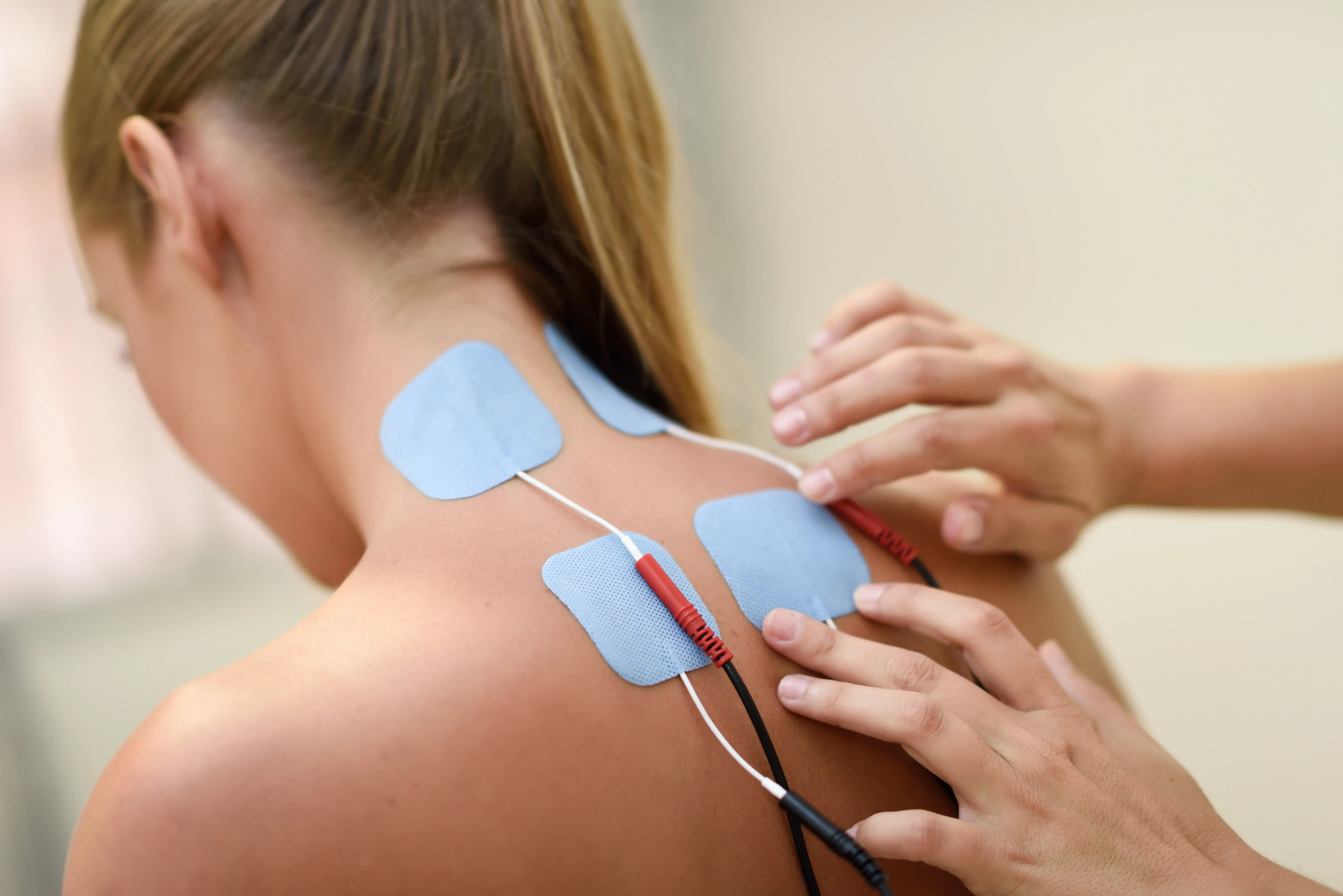
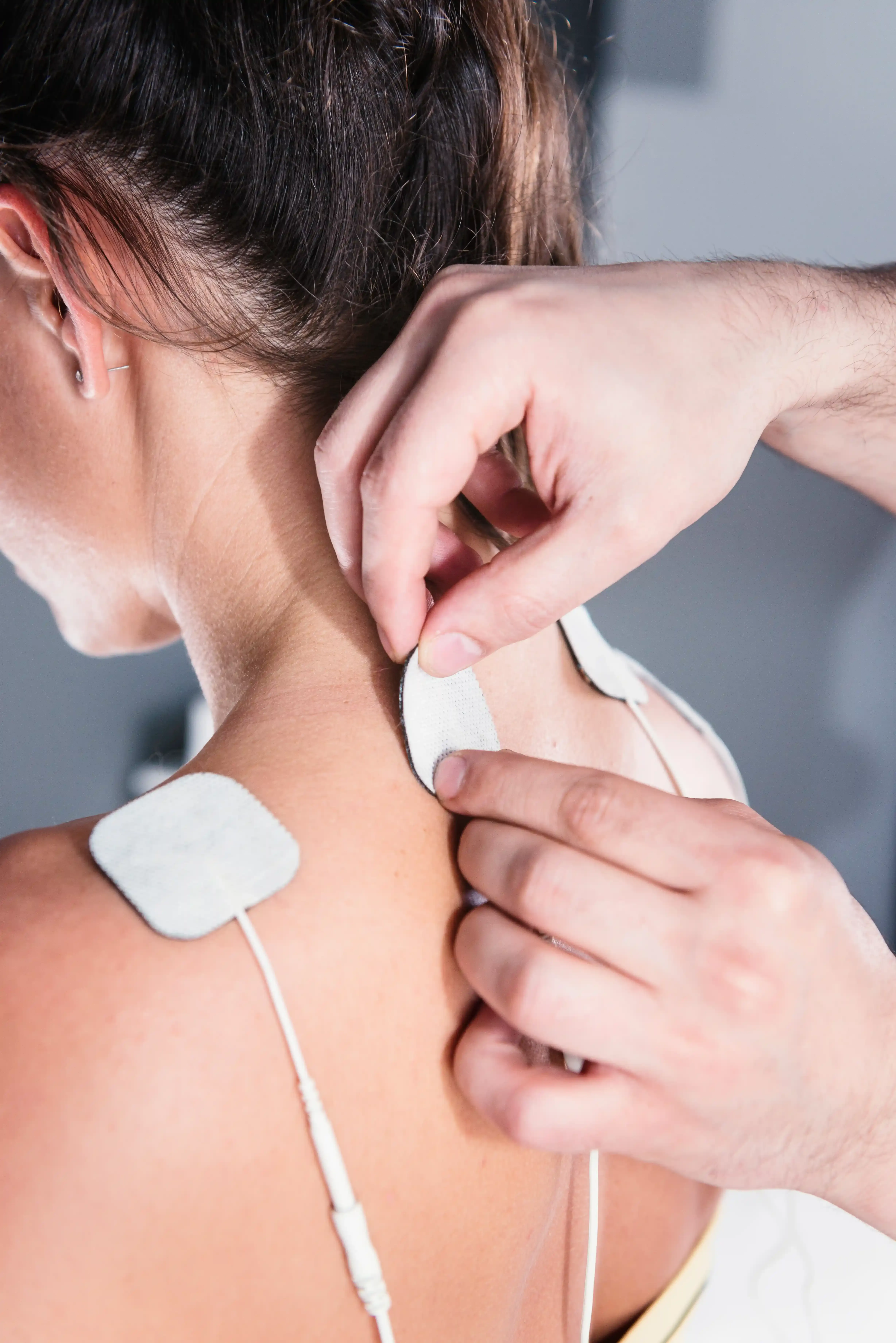
Electrical muscle stimulation gives the nervous system a different signal. Gentle, comfortable currents delivered through surface electrodes can interrupt pain transmission at the spinal cord (gate-control analgesia), trigger natural endorphin release and prompt the muscle to contract and relax in a controlled way. The result is less spasm, less pain and improved circulation to the area. Paired with chiropractic adjustments, soft tissue therapy or rehabilitative exercises, EMS gives the body a window of relief so the rest of the care plan can do its work.
TENS, IFC and NMES Explained
Electrical muscle stimulation (often shortened to EMS or E-Stim) is a clinical umbrella term for therapies that deliver low-voltage electrical currents through skin electrodes to nerves and muscles. At Spine-Ability, Dr. Ryan Canavan selects the current type and frequency based on whether the goal is pain relief, spasm reduction or muscle re-activation. The FDA recognizes these devices as Class II medical devices and the American Chiropractic Association lists electrical therapies among standard adjunctive treatments for musculoskeletal pain.
The three currents you may encounter in our office are TENS, interferential current (IFC) and NMES. TENS (Transcutaneous Electrical Nerve Stimulation) uses higher-frequency currents (50 to 150 Hz) primarily to block pain signals at the dorsal horn of the spinal cord through what neuroscience calls the gate-control mechanism. Interferential current crosses two medium-frequency currents (around 4,000 Hz) inside the tissue, producing a deeper, more comfortable beat-frequency in the painful area, ideal for deeper structures like the lumbar paraspinals or hip. NMES (Neuromuscular Electrical Stimulation) uses lower-frequency pulses that recruit motor units and produce visible muscle contractions, useful for re-activating muscles that have shut down after injury or surgery.
All three increase local circulation, prompt endorphin release and reduce the muscle's resting tone. EMS is non-invasive and drug-free. The sensation is usually described as a gentle pins-and-needles or a rhythmic squeezing, and Dr. Canavan adjusts intensity to a strong but comfortable level. EMS is most powerful as part of a combined plan, layered with chiropractic adjustments, soft tissue therapy or therapeutic exercise rather than used in isolation.
Comfortable, Drug-Free, Fast
2000+ Satisfied patients
Settles spasms and reduces resting muscle tone within minutes.
Uses gate-control theory to block pain signals before they reach the brain.
No medication, no needles, no systemic side effects to worry about.
Layers easily with adjustments, soft tissue therapy, decompression and exercise.
Most treatments run 10 to 15 minutes and fit inside a regular chiropractic visit.
Rhythmic contractions push fresh blood through the area to speed recovery.
How They Differ
| Treatment | Mechanism | Time | Results | Duration | Downtime | Best For |
|---|---|---|---|---|---|---|
| EMS Therapy at Spine-Ability | TENS, IFC or NMES selected and placed by a DC | 10-15 min | Often felt same session | Builds across 6-12 visits | None | Spasm, muscle pain and chronic pain alongside adjustments |
| At-Home TENS Unit | Single-mode TENS, self-applied electrodes | 20-30 min | Mild temporary relief | Hours; user-dependent | None | Maintenance between clinical visits |
| Trigger Point Injection | Injected anesthetic or saline into a muscle knot | 5-10 min | Often immediate | Weeks if effective | Soreness 1-2 days | Resistant trigger points unresponsive to conservative care |
Honest Guidance, Not a Sales Pitch
Electrical muscle stimulation fits most adults dealing with muscle pain, spasm or post-injury guarding, but a careful screen is essential. Here is who tends to benefit most, and when we recommend a different modality.
Tell Dr. Canavan about implanted devices, pregnancy, neurological conditions and any medications at your consultation. We screen carefully and adjust placement, intensity or modality as needed for your safety.
Step by Step
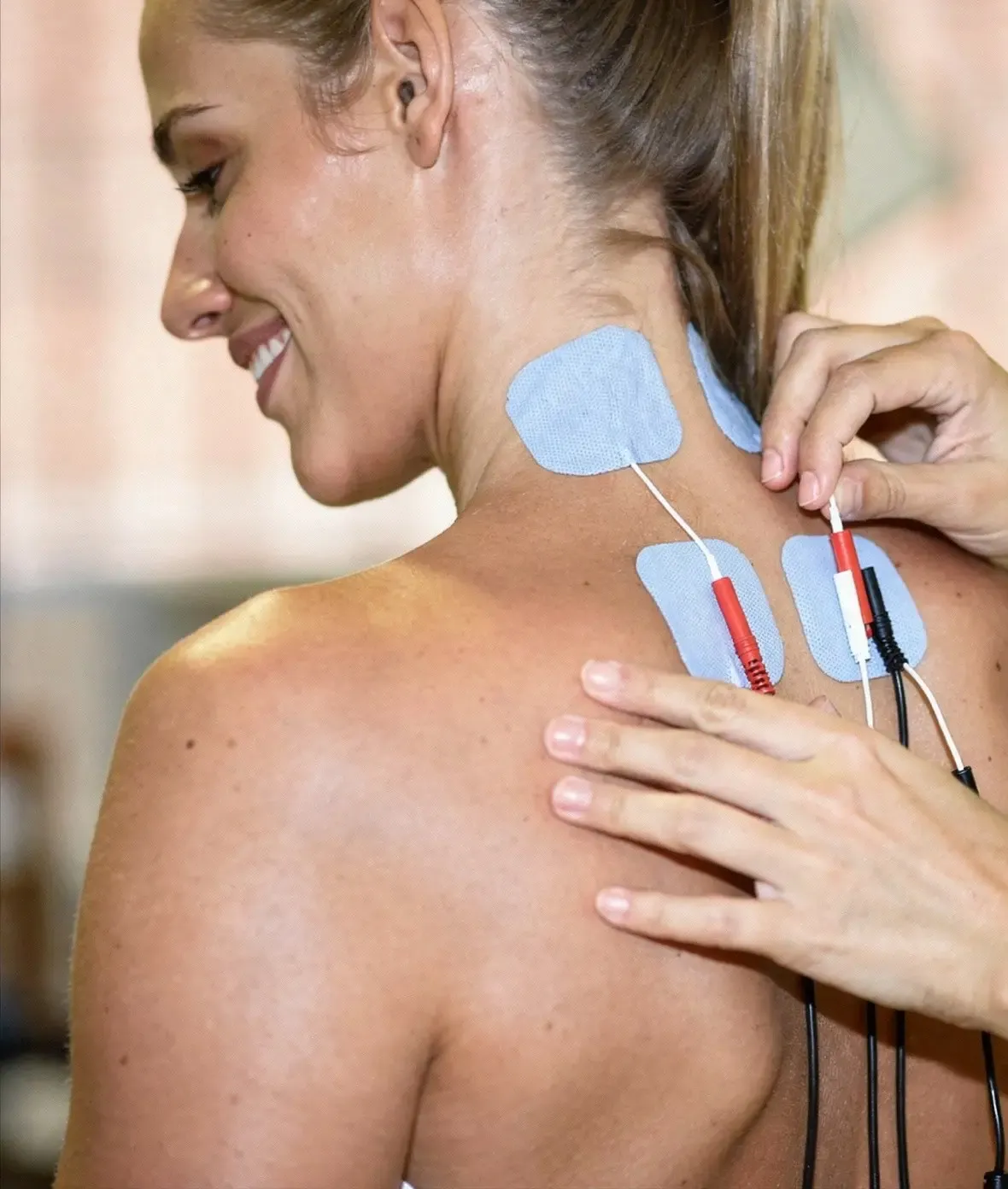
Dr. Canavan cleans the skin and places 2 to 4 electrodes over the target muscle group.
Dr. Canavan selects TENS, IFC or NMES, sets frequency and dials intensity to a comfortable level.
Dr. Canavan reduces intensity gradually, removes electrodes and pairs with adjustment or stretch as needed.
Honest Expectations
Electrical muscle stimulation has an excellent safety record when delivered by a trained provider on appropriately screened patients. The most common after-effects are brief skin redness or a faint outline where the electrodes sat, usually fading within an hour; mild muscle fatigue or a pleasant heavy feeling in the treated muscle for the rest of the day, similar to a light workout; and a brief sense of relaxation or tiredness after the first session as the nervous system unwinds.
Less common reactions include minor skin irritation under the electrode pads, especially in patients with sensitive skin or after extended sessions, and occasional muscle soreness the next day if NMES settings were used to drive stronger contractions. Skin burns or blistering are rare and essentially eliminated by proper electrode contact, conductive gel and intensity control. There are no systemic side effects, no medication interactions and no recovery time.
Contact our office if redness lasts more than 24 hours, if you notice numbness or tingling beyond the session or if a skin reaction develops. EMS is contraindicated over a pacemaker, in pregnancy near the abdomen and over the front of the neck, which is why we screen every patient before the first session.
Electrical muscle stimulation in the Tampa Bay market typically runs $25 to $75 per session as a standalone service, depending on the number of regions treated and whether NMES, TENS or interferential current is used. At Spine-Ability, EMS is most often delivered as part of a comprehensive chiropractic treatment plan, which means many of our patients pay no additional out-of-pocket cost on visits where EMS is part of their planned care.
Insurance and payment options at Spine-Ability:
Call (813) 938-7500 to verify your insurance, ask about self-pay packages or schedule a consultation at our Apollo Beach or Riverview office.
Apollo Beach and Riverview, FL
Dr. Canavan chooses TENS, IFC or NMES based on goal, depth and pain pattern.
Athletic Training MS plus DC means deep knowledge of motor units and pain pathways.
EMS layers seamlessly with adjustments, soft tissue work and rehab in one visit.
Family-owned since 2015, serving Apollo Beach and Riverview with concierge care.
Whether you're in the first days of an injury or managing a long-term condition, EMS intensity and frequency are adjusted to match exactly where you are in recovery.
VA Community Care and PIP billing handled in-house, making EMS therapy accessible for veterans and auto accident patients without added paperwork.VA Community Care and PIP billing handled in-house, making EMS therapy accessible for veterans and auto accident patients without added paperwork.
Pair EMS therapy with these treatments for a complete recovery plan.
Deep-tissue ultrasound that warms muscle and connective tissue, easing chronic pain and accelerating soft-tissue recovery between visits.
Learn MoreDeep-tissue Class IV laser for tendonitis, plantar fasciitis and stubborn joint pain - accelerates healing in 10-minute treatments with zero downtime.
Learn MorePersonalized therapeutic exercise programs to rebuild strength, balance and movement patterns after injury, surgery or chronic pain.
Learn MoreAnswers from Our Providers
EMS therapy uses gentle electrical currents delivered through surface electrodes to reduce pain, calm muscle spasm and re-activate muscles. At Spine-Ability we use TENS, interferential current and NMES depending on the goal.
EMS is used for muscle spasms, neck and lower back pain, post-injury muscle guarding, chronic pain and muscle re-activation after injury. It pairs well with adjustments, soft tissue therapy and rehab exercises.
Most patients feel relief in the first session. A typical course is 6 to 12 sessions over 3 to 6 weeks, layered with other chiropractic care. Dr. Canavan reviews your plan after the first visit.
No. The sensation is usually described as a gentle pins-and-needles or rhythmic squeezing. Dr. Canavan dials intensity to a strong but comfortable level and checks in throughout the session.
At-home TENS units use a single mode at fixed presets. In the clinic, Dr. Canavan selects between TENS, IFC and NMES, controls frequency and intensity precisely and places electrodes for the specific muscle and pain pattern.
Yes, when properly screened. EMS is contraindicated with pacemakers, in pregnancy near the abdomen, over the front of the neck and during active seizure disorders. We screen every patient before the first session.
Many major medical plans, Florida PIP for auto injury and VA Community Care for veterans cover EMS as part of chiropractic care. Call (813) 938-7500 to verify your benefits.